


Why fragmented energy systems are killing efficiency

Over the past few years, many enterprises have invested heavily in rooftop solar, battery storage, and EV charging to support decarbonization. These assets are now increasingly common across industrial and commercial sites, and on paper that looks like progress.
More assets, however, do not necessarily mean better performance. When energy systems are added faster than they are connected, companies can end up with a growing portfolio of assets which work well on their own, but not always together.
The problem is not complexity. It is fragmentation.
Energy portfolios are becoming more complex. As companies add more distributed assets, electrify operations and manage more energy data across sites, such complexity is often expected. The real problem is fragmentation, when these assets, systems and data are managed separately rather than connected as one operating environment.
Three ways fragmentation reduces efficiency
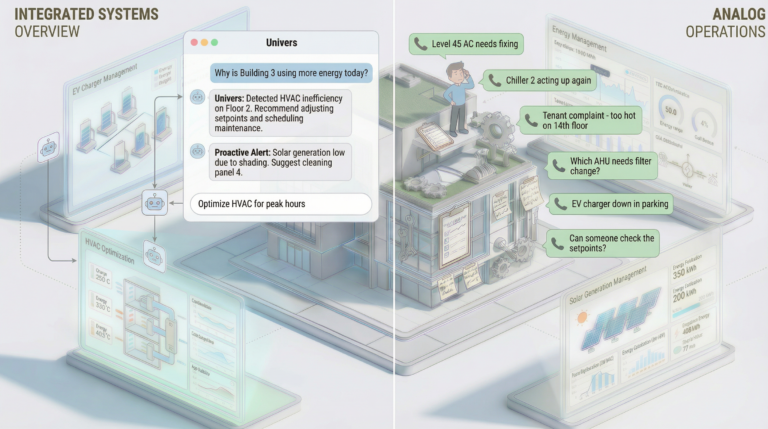
Once energy assets, systems and data are managed separately, inefficiency starts to appear in several ways: limited visibility, slower decisions and more manual execution.
- Limited Visibility: teams cannot see the full operational picture.
When energy data comes from separate vendors, platforms and teams, companies struggle to build a clear picture of what is happening across assets, sites, and portfolios. Each system may be useful on its own, but the overall picture remains incomplete.
This makes it harder to identify where energy is being wasted, which sites need attention first, or what is driving changes in cost and emissions. Existing data often remains spread across systems, making it harder to identify waste, prioritize sites, or understand what is driving changes in cost and emissions.
- Slower decision-making: data has to be checked across systems and teams.
Fragmentation slows decisions because information has to be pulled from multiple systems and checked across different teams. By the time an issue is understood, the best moment to act may have passed.
In energy operations, timing matters. Delayed decisions can mean missed opportunities to reduce load, adjust storage, or respond to changes in demand.
- Higher execution cost: actions require more manual coordination.
Even when the right action is clear, fragmented systems make execution harder to carry out. Teams may need manual workarounds, repeated handovers, or custom integrations to bridge gaps between separate systems.
The result is slower execution, more coordination effort, and weaker outcomes from the assets already in place.
From fragmented systems to one unified platform
If fragmentation is the problem, adding another standalone tool is not enough. A dashboard may improve visibility, but it does not help teams manage how energy moves across the site.
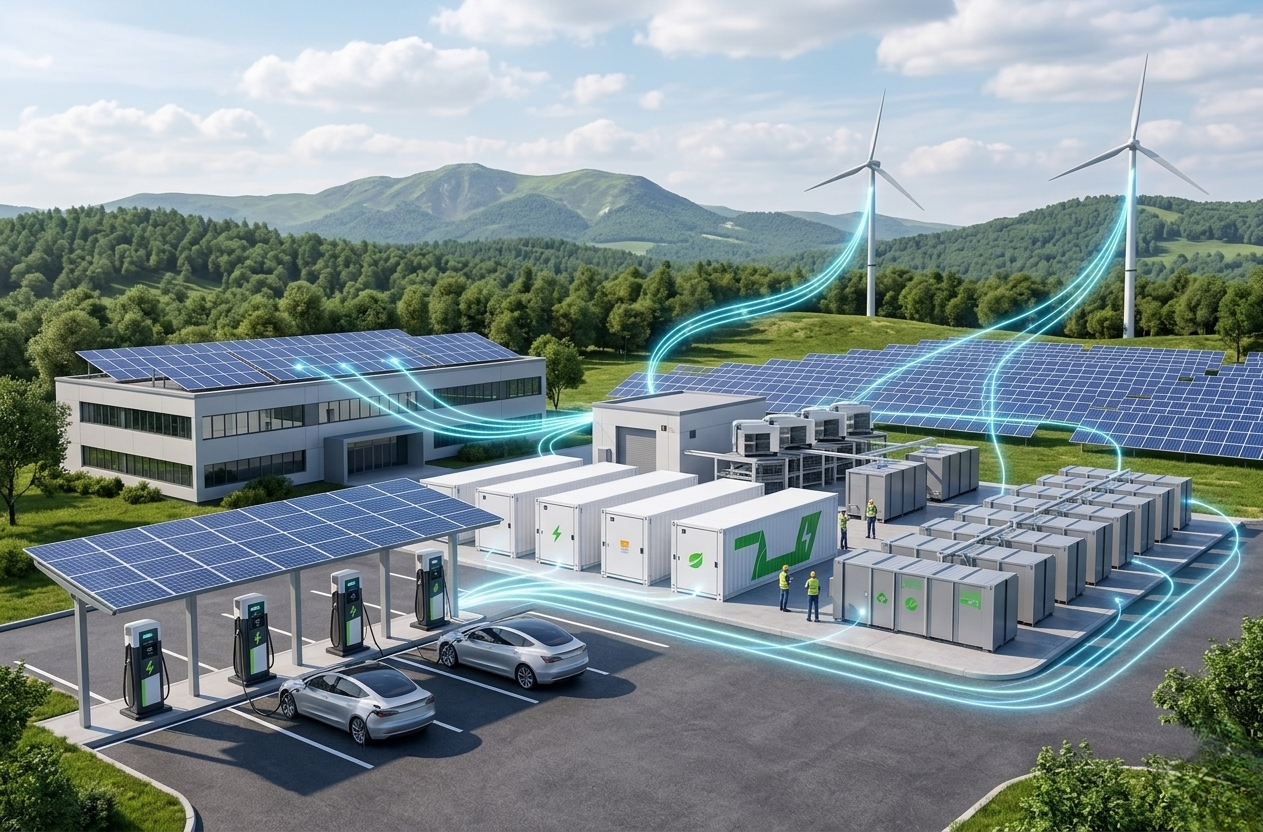
This is especially important in microgrids, where local generation, storage, building demand, EV charging, and grid supply need to be managed together. Decisions about when to use solar power, store it, export it or use batteries to reduce peak demand cannot be made asset by asset.
For enterprises managing distributed energy assets, microgrid value comes from that coordination. When these assets are managed in one operating environment, teams can respond faster, reduce manual coordination, and unlock more value from existing assets.
Fragmentation limits value. Coordination helps unlock it.